
Hotel owners and operators
One installer for furniture and window treatments, scheduled around your room releases.
Hotel drapery installation is the field measuring, receiving, mounting and finishing of a hotel’s window treatments: tracks and rods, blackout and sheer drapery, roller shades, motorized systems and top treatments. Doneright installs them for hotel renovations and new openings across California, verifying openings, substrates and fire-code documentation, and leaving every window dressed, operating and punch-ready.
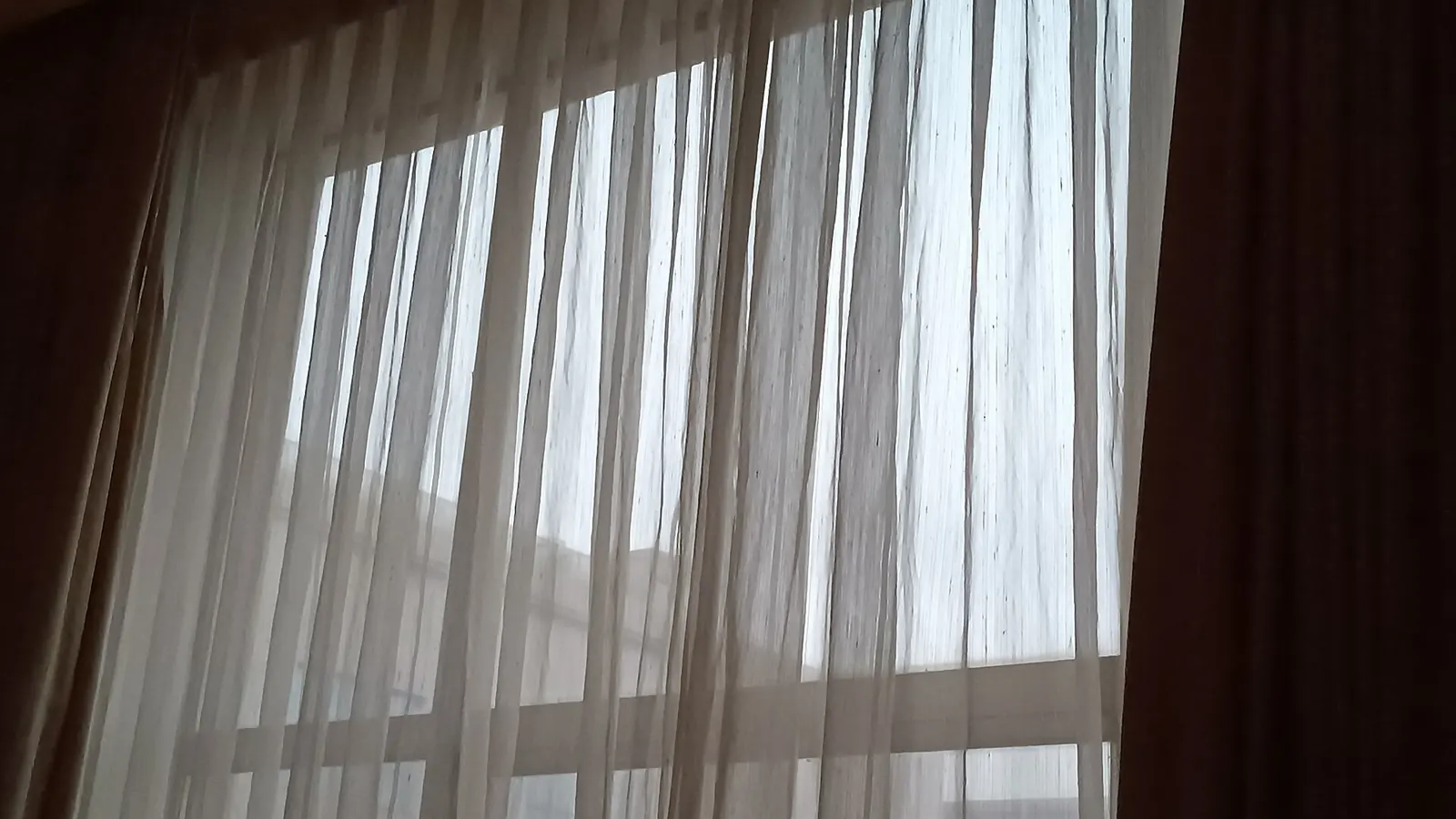
Window treatments are among the last things installed in a hotel room and the first things a guest touches. A binding track or a blackout panel with a bright edge gap becomes a maintenance ticket on opening night. Doneright installs drapery and window treatments as part of a full-service FF&E installation scope, so the same crew that sets the casegoods also measures, mounts, hangs, dresses and tests every window.
Doneright Contracting since 1998, serving hotels since 2000. We work for hotel owners and management companies, general contractors, purchasing and procurement companies, and drapery manufacturers and fabricators who need a reliable installer in California.
Who we install for
One installer for furniture and window treatments, scheduled around your room releases.
A sub that measures, mounts and punches to your sequence and coordinates with electrical, ceilings and paint.
A California receiving point and a crew that reports counts, damage and shortages against your POs.
Install-only labor that follows your shop drawings, protects your product and photographs every finished window.
Most drapery problems start with a number taken from a drawing instead of the wall. Before production we site measure, or verify the fabricator’s measure of, every window type:
What we install
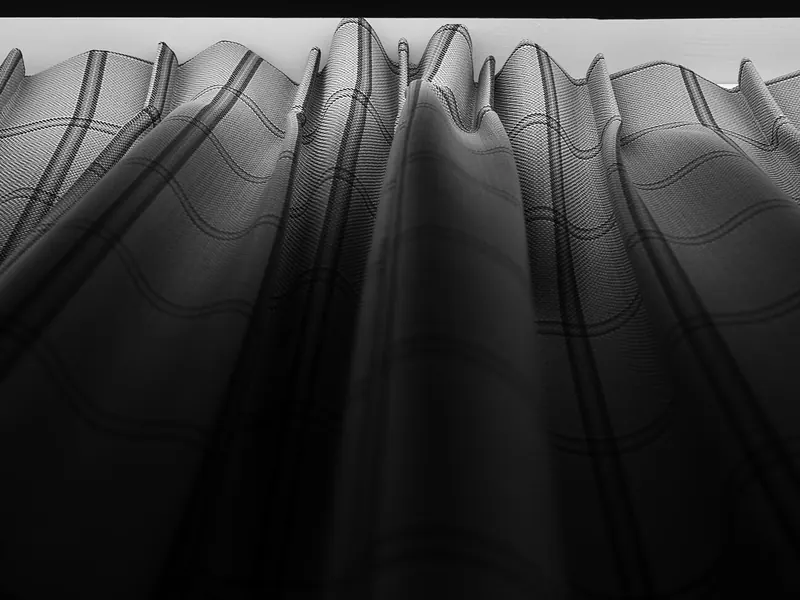
Blackout liners and blackout-backed face fabrics for guestrooms where guests expect a dark room; dim-out liners where the design calls for softer light control.
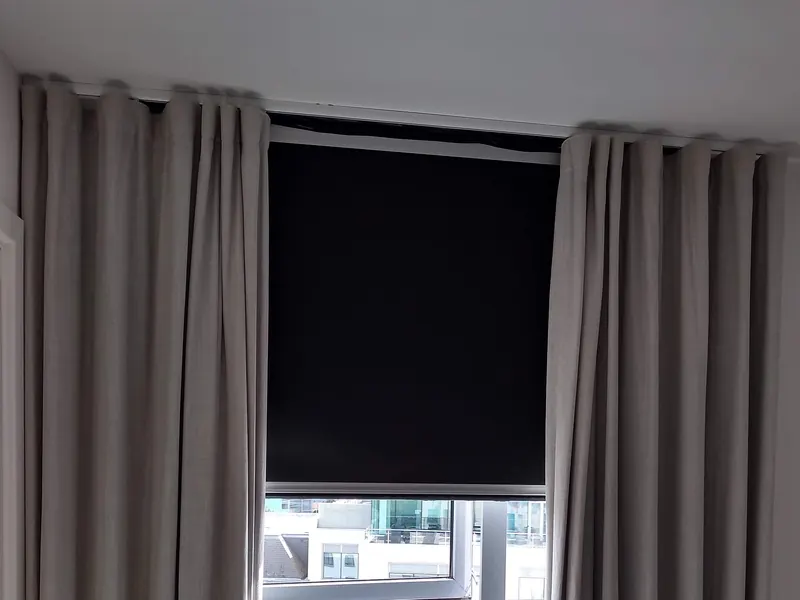
Manual chain or cord-free roller shades, motorized shades, and dual or combo units that pair a blackout shade with a solar or sheer shade in one bracket. Fascia, cassette and side-channel options are installed to the specified mount.
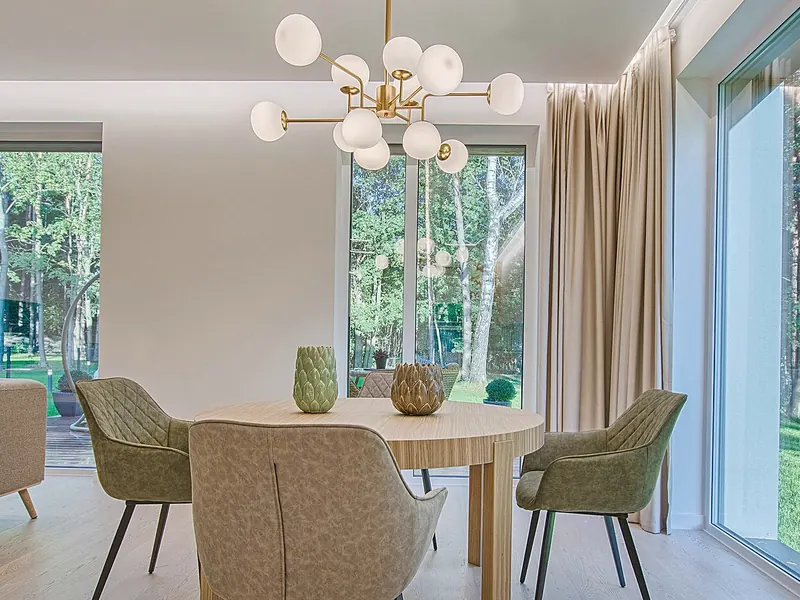
Sheers on their own track in front of or behind the blackout layer, plus stationary side panels and decorative rods for lobbies, restaurants and suites.
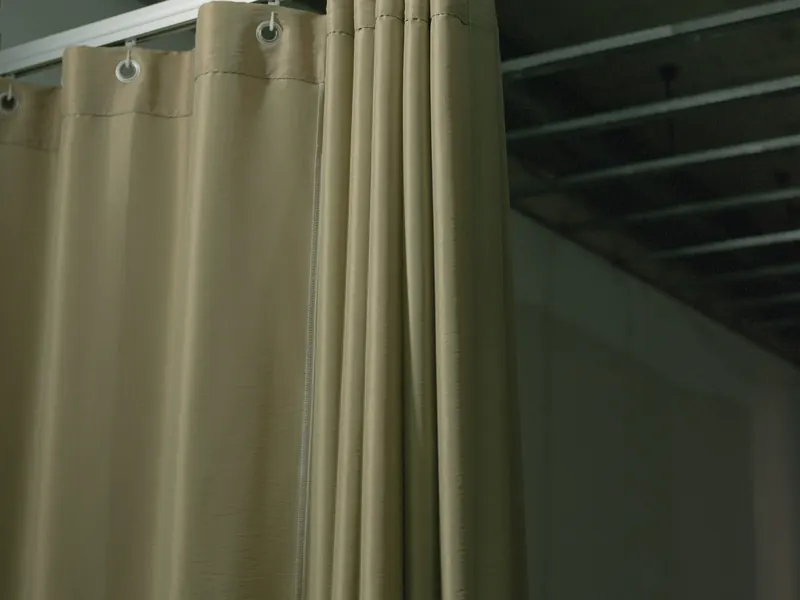
Ripplefold or wave, pinch-pleat and grommet headings on ceiling- or wall-mounted tracks and rods, including curved and bent track. Carriers, snap tapes and master carriers are matched to the heading so the stack and fullness come out as designed.
Valances, cornices and top treatments. Upholstered cornice boxes, soft valances and fabric-wrapped headers are mounted to blocking and scribed to the wall so they cover the track and cut light at the top. Top-of-bed coordination is optional: when bedspreads, bed scarves and decorative pillows from the same fabric program arrive with the drapery, we can place them during room setup so each room is turned over complete.
Hotel hardware has to survive thousands of draws by first-time users:
Motorized tracks and roller shades are common in suites, ballrooms, meeting rooms and lobbies with tall glass. The choice between hardwired and battery motors shapes the whole installation. Hardwired motors need power at the head of each track or shade, so we coordinate locations, junction boxes and low-voltage wiring with the electrical contractor early, before ceilings close. Battery and rechargeable motors avoid that wiring but need a charging plan for the engineering team. We mount motors, tracks and shades, set limits and groups per the specification, and test every unit. Line-voltage connections are made by the electrical contractor. Where shades or drapery tie into room controls or keycard systems we coordinate with the systems integrator so control wiring and programming are ready when the hardware goes in.
A track is only as good as what it is fastened to. Before drilling we confirm the substrate at every bracket location:
Drapery in California hotels has to be flame-retardant. Before fabric is hung, our crew verifies the supplier’s documentation that the face fabric and liners meet NFPA 701 and California Title 19 requirements, including the State Fire Marshal registration or certificate of flame resistance the project calls for, and checks that labels match what was delivered. We do not certify fabric ourselves; we confirm the paperwork is present and matches the shipment, and include copies in the closeout binder for the fire marshal’s inspection.
Accessible guestrooms and public spaces also need controls guests can reach and operate. We install wands, cord-free controls, switches and remotes where the drawings place them, and point out locations that may fall outside the project’s ADA reach-range or operable-part requirements so the design team can decide before punch.
How it works
Window treatments usually follow paint, wallcovering, flooring and casegoods, so our drapery crew follows the furniture crew floor by floor instead of waiting for the whole building. In occupied hotels we install in the room blocks the property releases, keep cartons and ladders out of guest corridors. Ballrooms, restaurants, meeting rooms and lobbies can be scheduled after hours or between events.
Guestrooms and suites get layered blackout and sheer systems, roller shades and top-of-bed coordination. Ballrooms and meeting rooms need long motorized or hand-drawn runs, room-divider coordination and blackout for presentations. Restaurants and lobbies add decorative panels, tall glass, curved track and cornices where the drapery is part of the design statement.
We also replace worn or damaged panels, re-hang drapery after painting or wallcovering work, swap liners, replace carriers, wands and end stops, re-level sagging track and add blackout shades to rooms that get too much light. Send room numbers and photos and we will scope the visit.
We install hotel window treatments statewide. Each city page covers local access, logistics and scheduling:
The same team handles FF&E installation of casegoods, seating and lighting, receiving and warehousing in Stockton, logistics and delivery, punch and turnover, removal of the outgoing FF&E and appliance removal and replacement. Manufacturers can see how we handle product on our manufacturer receiving and installation page.
A hotel drapery installer verifies window openings, mounts tracks, rods and shade hardware, hangs and dresses the drapery, connects or coordinates motorized systems, and completes punch. We also receive, store and stage the product by floor at our Stockton warehouse.
Yes. We offer install-only service to drapery manufacturers, fabricators and purchasing companies. We receive and check the shipment, report damage with photos, and install to your shop drawings and the project specifications.
Yes. We site measure or verify every opening type, including widths, heights, ceiling and soffit heights, pocket depths, stack-back, returns, overlaps and floor clearance, and send the field dimensions to the fabricator. The fabricator confirms final sizes on its shop drawings before production.
Yes. We mount motorized tracks and shades, both hardwired and battery-powered, and coordinate with the electrical contractor, who provides power and low-voltage wiring at each window. Integration with room controls or keycard systems is set up with the systems integrator named on the project.
Yes, as part of installation. Before we hang fabric, we verify the supplier’s documentation that it meets NFPA 701 and California Title 19 and State Fire Marshal requirements, match labels to the shipment, and keep copies for closeout. The fabric supplier is responsible for the certification itself.
We mount to concrete with anchors suited to the slab or wall, to drywall where wood or metal blocking has been installed, and to metal stud framing. For post-tensioned concrete we drill only after the GC approves the locations and the slab has been scanned.
Yes. We install in the room blocks the hotel releases, keep cartons out of guest corridors, and can schedule ballrooms, restaurants and lobbies after hours or between events.
Statewide: from Bakersfield north through Fresno, the Central Valley, Sacramento and the Bay Area to the Oregon border, plus Los Angeles, Orange County and San Diego.
Yes. Besides full renovations, we replace worn or damaged panels, re-hang drapery after painting or wallcovering work, swap liners, replace carriers and wands, and re-level tracks. Send the room numbers and photos and we will scope the work.
Send the property location, window-treatment schedule or room count, drawings or photos, who is supplying the product, whether the work is in an occupied hotel, and your target dates. We will review the scope and reply with availability.
Photos are representative stock images, not Doneright projects: guestroom sheers and drapery by TWMEAU rOEPPOUL, Wikimedia Commons, CC0 (cropped and resized); blackout roller shade with drapery by Cirosantilli2, Wikimedia Commons, CC BY-SA 4.0 (cropped and resized); drapery panels on rods by Superuser1985, Wikimedia Commons, CC BY 4.0 (cropped and resized); pleated drapery detail by Jules Verne Times Two, Wikimedia Commons, CC BY-SA 4.0 (cropped and resized); drapery on a curved track by Easysayg, Wikimedia Commons, CC BY-SA 4.0 (cropped and resized). Adapted versions of the CC BY-SA images are shared under the same license.